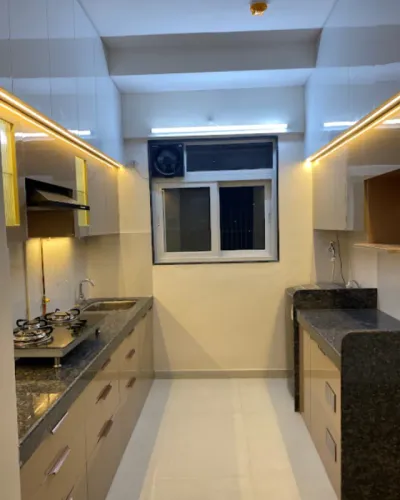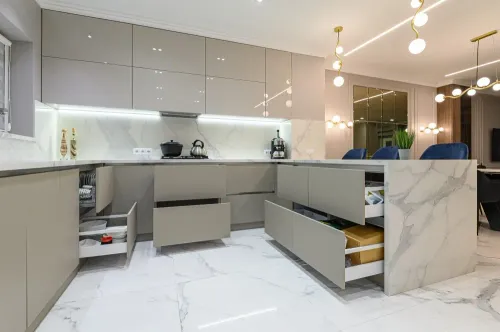
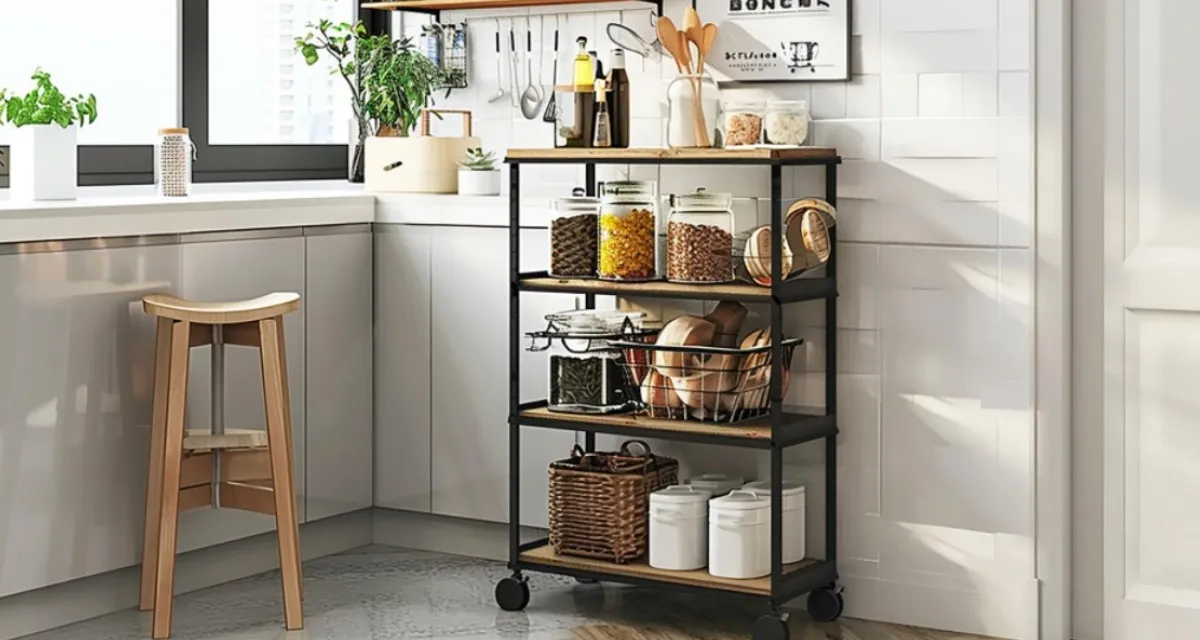
A kitchen trolley system can transform lower cabinets from simple storage boxes into organised, accessible spaces. However, choosing trolleys only by appearance or the number of baskets can lead to wasted space.
For homeowners in Thane planning a modular kitchen or upgrading an existing one, the right trolley configuration should be based on what needs to be stored.
Identify the Items Causing Clutter
Before selecting trolley units, look at your existing kitchen.
Which items are difficult to organise? Common examples include pots, pans, plates, bowls, cutlery, bottles, spice containers, and cooking tools.
Grouping these items makes it easier to decide where drawers or pull-out storage would provide genuine value.
Different Storage Needs Require Different Solutions
A single drawer depth is rarely ideal for everything.
Shallow drawers work well for cutlery and smaller utensils. Medium-depth storage can accommodate plates, bowls, and containers, while deeper drawers may be more appropriate for larger cookware.
Bottle pull-outs can organise oils and sauces vertically, provided the chosen dimensions suit the household's actual bottles.
The objective is to give each category a logical location.
Pay Attention to Hardware
A trolley is opened and closed repeatedly, often while carrying substantial weight.
Drawer channels and related hardware therefore play an important role in everyday performance.
When comparing options, ask about:
- Recommended load capacity
- Drawer movement
- Closing mechanism
- Hardware specification
- Maintenance
- Warranty terms where applicable
Smooth operation in a showroom is useful, but homeowners should also consider how the mechanism will perform when the drawer is filled.
Position Trolleys According to Workflow
Storage becomes more convenient when it is close to the activity it supports.
Cooking utensils and cookware can be positioned near the hob. Cutlery may be stored near the main preparation area. Cleaning-related storage is generally more useful around the sink zone.
This reduces unnecessary movement while cooking.
For compact kitchens common across Thane and Mumbai's wider metropolitan region, careful positioning can have a noticeable effect on usability.
Avoid Filling Every Cabinet With Mechanisms
Pull-out systems are convenient, but they are not automatically the best choice for every cabinet.
Some large or rarely used items may be stored efficiently on conventional shelves. Adding complex mechanisms everywhere can increase cost and reduce usable internal dimensions.
A combination of drawers, pull-outs, and shelves often provides a better balance.
Measure Large Utensils Before Finalising Drawers
One of the simplest planning steps is also one of the most useful: measure your largest cookware.
If a deep drawer cannot comfortably hold the pressure cooker, kadai, or stockpot it was intended for, the storage plan has failed regardless of how attractive it looks.
The same principle applies to plate organisers and bottle units.
Think About Cleaning
Kitchen storage inevitably collects crumbs, dust, and occasional spills.
Choose systems that can be accessed sufficiently for routine cleaning. Internal organisers should also suit the household's maintenance preferences.
Kitchen Gallery can incorporate kitchen trolley configurations into modular kitchen planning for Thane homes based on available dimensions and storage requirements.
The best trolley system is not necessarily the one with the most accessories. It is the one that gives frequently used kitchen items a predictable, accessible place while allowing drawers to operate comfortably under everyday use.
Keywords