Choosing a home interior designer involves more than comparing attractive portfolios. The designer or interior provider will make decisions that affect storage, movement, lighting, furniture dimensions, materials, and how different rooms connect visually.
For homeowners in Thane, asking the right questions before finalising a provider can reduce misunderstandings once design and execution begin.
Does the Designer Understand How You Live?
A useful first consultation should involve questions, not only suggestions.
The designer should understand who lives in the home, how each room is used, storage expectations, preferred aesthetics, existing furniture, and practical concerns.
A family with young children may prioritise different materials and storage than a couple furnishing a new apartment. A household working from home may need dedicated workspace, while another may prioritise entertaining areas.
Design should respond to these differences.
Ask to See Relevant Work
A portfolio can reveal design ability, but relevance matters.
If you own a compact apartment, examples of very large luxury homes may not demonstrate how the provider manages limited space.
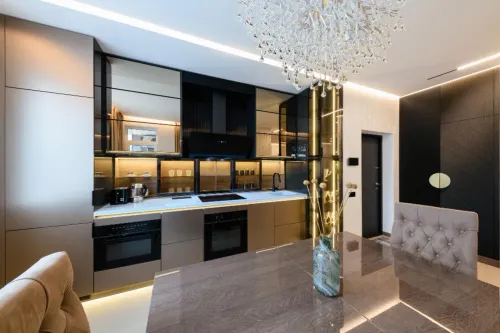
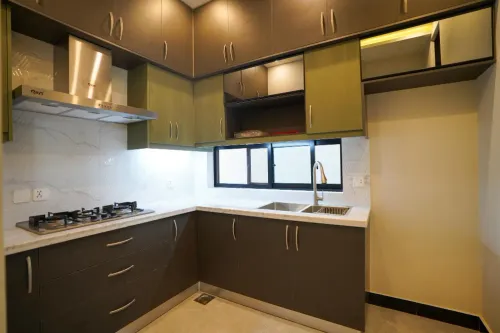
Look for projects involving comparable room dimensions, storage challenges, modular kitchens, wardrobes, and furniture requirements.
Ask how design decisions were made rather than judging photographs alone.
Clarify the Scope Early
“Home interiors” can mean different things to different providers.
Before comparing quotations, determine whether the proposed scope includes:
- Space planning
- Modular kitchen
- Wardrobes
- Custom furniture
- Storage units
- False ceiling
- Lighting coordination
- Material selection
- Installation
- Site coordination
A detailed scope makes quotations easier to understand and reduces assumptions.
Discuss Materials, Not Just Colours
Material decisions influence maintenance and long-term use.
Ask why a particular material or finish is being recommended for a specific location. Kitchens, wardrobes, TV units, and frequently handled furniture may have different performance requirements.
The provider should be able to explain alternatives rather than simply presenting the most expensive option.
Understand How Revisions Are Managed
Interior projects evolve as homeowners see layouts and material combinations.
Before starting, understand how designs are reviewed, when major decisions become final, and how later changes may affect cost or timelines.
Making key decisions before manufacturing or installation usually reduces avoidable rework.
Look for Coordination Between Rooms
A home does not need every room to look identical, but there should be some visual relationship between spaces.
Colours, wood tones, hardware, lighting, and furniture proportions can be coordinated so the property feels intentional rather than assembled room by room.
This is especially relevant in modern Thane apartments with open living, dining, and kitchen areas.
Evaluate Communication as Carefully as Design
A provider may have an attractive portfolio but still be difficult to work with if specifications are unclear or communication is inconsistent.
Pay attention to whether questions receive specific answers and whether recommendations reflect your stated priorities.
Kitchen Gallery provides modular kitchen and home interior solutions in Thane. Homeowners considering a project can use an initial discussion to assess whether the proposed design process fits their space, requirements, and expectations.
The right home interior designer should help convert preferences into workable decisions. Clear scope, practical planning, suitable materials, and consistent communication are ultimately as important as the final visual style.
Keywords