A modular wardrobe should provide accessible storage while fitting naturally into the bedroom. Selecting the right wardrobe involves decisions about size, shutter type, internal layout, materials, and finish.
Step 1: Decide What Needs to Be Stored
List your hanging clothes, folded garments, accessories, luggage, and seasonal items. This prevents the internal sections from being divided without considering actual requirements.
Step 2: Choose the Shutter Style
Hinged wardrobes provide complete internal visibility but require space for doors to open. Sliding wardrobes work well in compact bedrooms because they do not occupy additional floor area.
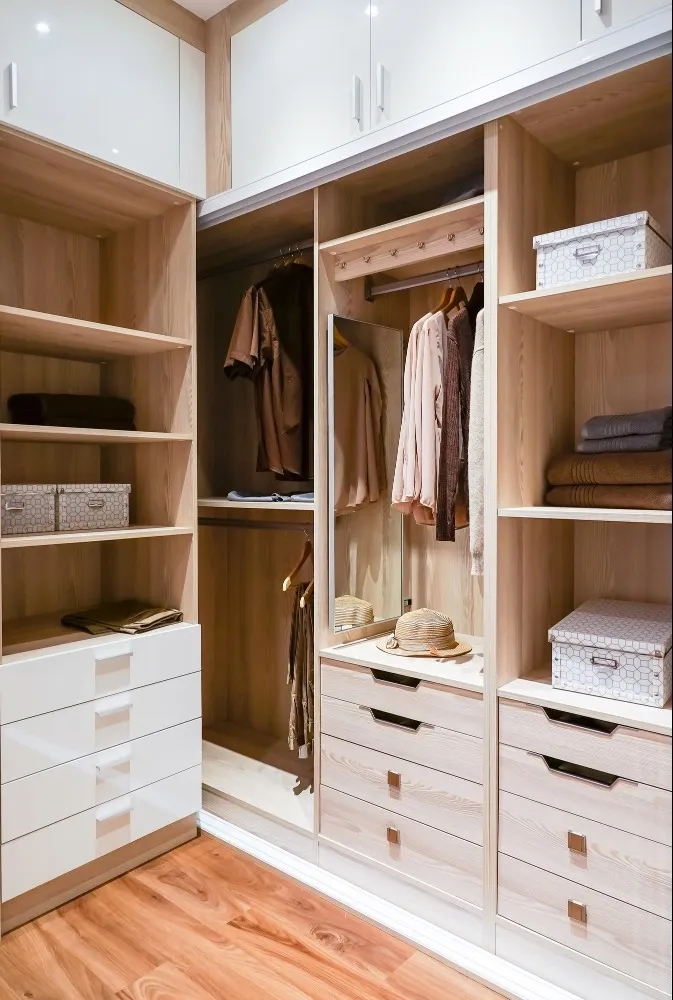
Step 3: Plan the Internal Layout
A practical wardrobe may include:
- Separate long and short hanging sections
- Adjustable shelves for folded clothes
- Drawers for valuables and accessories
- Upper storage for luggage and seasonal items
Step 4: Check Materials and Hardware
Board quality, edge sealing, hinges, sliding channels, handles, and drawer fittings affect durability. In Thane’s humid climate, materials should also offer suitable moisture resistance.
Kitchen Gallery creates modular wardrobes according to wall dimensions, storage habits, room décor, and available space. Custom planning helps avoid unused corners and poorly positioned shelves.
Arrange a wardrobe measurement visit to receive an internal storage configuration designed around your clothing and bedroom space.
Keywords